Mobile gaming has become one of the most popular forms of entertainment worldwide. Millions of people use smartphones to play online games, compete with friends, complete challenges, and explore interactive virtual worlds. As mobile technology continues to advance, internet connectivity has become an important factor in creating a smooth gaming experience. One major development is 5G technology, which promises faster internet speeds, lower latency, and improved network performance.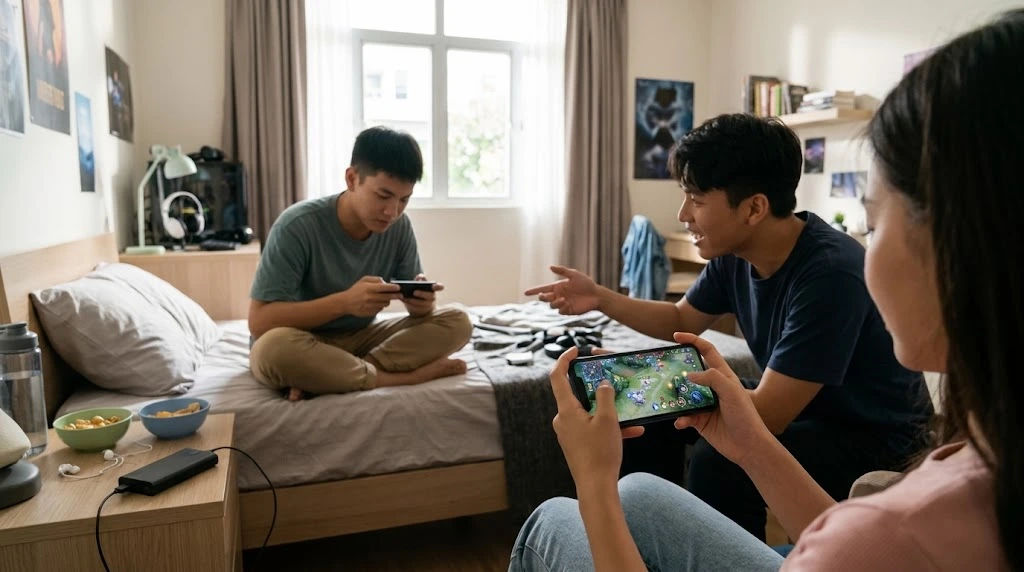
For players who enjoy online entertainment, understanding the relationship between internet connectivity and gaming performance can help them make better decisions. Whether someone enjoys multiplayer competitions, racing games, battle royale experiences, or casual puzzle challenges, a reliable network can make a noticeable difference. Mobile App Gaming has become increasingly dependent on stable internet connections, particularly for games that require real-time communication between players and servers.
But does 5G genuinely improve gaming performance, or is it simply a newer internet technology with impressive speed claims? The answer depends on several factors, including network coverage, smartphone compatibility, game requirements, and connection stability. This comprehensive guide explains how 5G affects mobile gaming, its advantages, possible limitations, and what players should consider before upgrading.
5G Technology
5G is the fifth generation of mobile network technology. It follows earlier generations, including 3G and 4G LTE, and introduces improvements designed to support faster communication and more connected devices.
Unlike older networks, 5G can deliver significantly higher data speeds under suitable conditions. It also has the potential to reduce communication delays, allowing information to travel between a smartphone and a remote server more quickly.
These improvements are particularly valuable for online entertainment because many modern games depend on continuous communication.
How 5G Works
5G uses different radio frequency bands to transmit information between mobile devices and network infrastructure. Depending on the frequency band, network design, and distance from a cellular tower, users may experience different performance levels.
Low-band 5G generally offers wider coverage and better building penetration. However, its speeds may be closer to those of established 4G networks.
Mid-band 5G provides a balance between coverage and performance. It can deliver substantially faster connections while serving larger areas than high-band technology.
High-band 5G, often called millimeter wave, offers extremely high speeds and considerable capacity. However, its coverage is limited, and signals can be affected by physical obstacles.
These differences explain why not every 5G connection provides the same gaming experience.
Why Internet Technology Matters for Gaming
Online games constantly exchange information between devices and game servers. This information can include player movements, actions, scores, positions, and other game-related events.
A weak or inconsistent connection can interrupt this communication. Players may experience delayed responses, unexpected disconnections, or interruptions during important moments.
A stronger network can help reduce these problems, although the quality of the game server and the player's distance from it also matter.
Does 5G Improve Mobile App Gaming Performance?
Mobile App Gaming zs777 performance, especially when players use applications that depend on real-time internet communication.
Its biggest advantages are lower latency, faster downloads, and greater network capacity. These improvements can make online gaming more responsive and convenient.
However, 5G does not automatically make every game run better. A smartphone's processor, graphics hardware, memory, and software also determine how smoothly a game operates.
For example, a demanding 3D game may struggle on an older smartphone even when the internet connection is extremely fast.
Faster Data Transmission
One of the most noticeable advantages of 5G is its potential for faster data transmission.
Modern games frequently contain detailed environments, high-resolution graphics, multiplayer features, and downloadable content. Faster connectivity makes it easier to download game files, updates, and additional resources.
Players can spend less time waiting for large downloads when their network supports higher speeds.
However, faster downloads do not necessarily improve the frame rate or graphics quality of a game. Those features mainly depend on the device itself.
Reduced Network Delays
Latency refers to the time required for information to travel between a device and a server.
Lower latency is particularly important for competitive games. When a player moves, shoots, jumps, or performs another action, the game must communicate that information to the server.
If communication is delayed, the action may appear later than expected.
5G can reduce network latency under favorable conditions. This can make controls feel more responsive and improve the experience of fast-paced online games.
The Importance of Low Latency in Online Gaming
Latency is one of the most important measurements for evaluating an internet connection for gaming.
Although download speed receives considerable attention, a connection with lower latency can provide a better experience in competitive environments.
Understanding Ping
Ping measures the time required for a signal to travel to a server and return. It is usually measured in milliseconds.
A lower ping generally means faster communication between the player's device and the server.
For example, a connection with a 20-millisecond ping will usually provide quicker communication than one with a 100-millisecond ping, assuming other network conditions are similar.
However, ping is not the only measurement that matters. Packet loss, jitter, and connection stability can also influence performance.
How Low Latency Helps Competitive Games
Competitive games require quick decisions and accurate timing. Even a small communication delay can affect the player's ability to respond effectively.
Consider a multiplayer shooting game. A player may see an opponent and immediately attempt to take action. The game must transmit the command and synchronize the result with the server.
A lower-latency connection can reduce communication delays during this process.
This is particularly useful for:
-
First-person shooting games.
-
Multiplayer battle royale games.
-
Online racing competitions.
-
Fighting games.
-
Real-time strategy games.
-
Competitive sports simulations.
Although 5G can provide an advantage, the actual result depends on the network's connection to the game server.
Faster Game Downloads and Updates
Large game downloads can be frustrating, particularly when players want to start playing immediately.
Modern mobile games sometimes require substantial downloads because they include high-quality textures, sound files, maps, and additional content.
5G can make these downloads considerably faster when suitable network speeds are available.
Downloading Large Game Files
A fast network can reduce the time required to install new games and download additional resources.
For example, a game requiring several gigabytes of data may download much faster over a strong 5G connection than over a slower connection.
This is helpful for players who regularly explore new games or install several titles on their smartphones.
Installing Game Updates
Developers frequently release updates to improve gameplay, fix technical problems, introduce new features, and maintain security.
Some updates are small, while others contain large amounts of additional content.
With 5G, players may be able to download these updates more conveniently. This reduces waiting time and helps them return to their favorite games sooner.
However, installation speed also depends on the smartphone's storage performance and processing capabilities.
Does 5G Improve Multiplayer Gaming?
Multiplayer games depend on communication between multiple players and centralized servers. A reliable internet connection helps synchronize actions and maintain a consistent gaming environment.
5G can improve this experience by providing higher network capacity and potentially lower latency.
Better Real-Time Communication
In multiplayer environments, players need to receive information about the actions of other participants.
For example, in an online racing game, every player needs updated information about vehicle positions and movements.
If network communication becomes unstable, players may experience delayed movements or inconsistent gameplay.
A reliable 5G connection can help reduce these interruptions.
Supporting More Connected Players
Some multiplayer games support large numbers of participants in shared environments.
Network congestion can affect performance when many devices compete for available bandwidth.
5G networks are designed to support greater device capacity, making them potentially more suitable for busy environments.
However, actual results depend on network infrastructure, available capacity, and the number of connected users.
Reducing Lag During Important Moments
Lag can become particularly frustrating during competitive matches.
A delayed movement or missed action can affect the outcome of a game.
By providing improved network responsiveness under suitable conditions, 5G can help players enjoy more consistent online sessions.
It cannot eliminate every source of lag, especially when the game server is experiencing problems.
How 5G Supports Cloud Gaming
Cloud gaming allows users to play games that run on remote servers instead of being processed entirely by their smartphones.
The server handles demanding computing tasks and streams the visual output to the player's device.
This technology can make advanced gaming experiences accessible through compatible mobile devices.
Streaming High-Quality Games
Cloud gaming services may stream games with detailed graphics and complex environments.
Because the game runs remotely, the smartphone does not need to perform every demanding graphical operation itself.
A fast and stable connection helps deliver visual information without excessive interruptions.
5G can support higher-quality streaming when network conditions are suitable.
Reducing Streaming Interruptions
Cloud gaming requires continuous communication between the device and the remote server.
If the connection becomes unstable, players may experience buffering, image quality reductions, or delayed controls.
A reliable 5G connection can help maintain smoother streaming.
However, cloud gaming remains sensitive to latency because player actions must travel to the server and the resulting video must return to the device.
Access to More Gaming Options
Cloud gaming can reduce the need to download and install large games directly onto a smartphone.
Players can access supported titles through compatible applications and subscriptions.
This can be useful for devices with limited storage or less powerful hardware.
Nevertheless, cloud gaming services have different requirements, and a suitable 5G connection does not guarantee compatibility with every platform.
Does 5G Improve Graphics and Frame Rates?
One common misunderstanding is that faster internet automatically improves graphics and frame rates.
In reality, these features are mainly controlled by the smartphone's hardware and software.
Smartphone Processing Power
The processor handles important gaming operations, including calculations, game logic, and communication between hardware components.
A powerful processor can run demanding games more efficiently.
5G cannot replace the processing capabilities of a modern smartphone.
Graphics Processing Unit
The graphics processing unit, or GPU, handles visual rendering.
It determines how effectively the smartphone displays detailed environments, textures, lighting effects, and animations.
A stronger GPU can support better graphical performance and higher frame rates.
A 5G connection does not directly increase GPU performance.
Understanding Frame Rates
Frame rate refers to how many individual images a device displays every second.
For example, a game running at 60 frames per second displays 60 frames every second.
Higher frame rates can make movement appear smoother, particularly in fast-paced games.
However, frame rate depends primarily on device capabilities, game optimization, and graphics settings rather than mobile network generation.
5G Versus 4G for Mobile Gaming
Both 4G and 5G can support online gaming. The better option depends on coverage, network conditions, and the type of game being played.
|
Feature |
4G LTE |
5G |
|---|---|---|
|
Download speed |
Generally good |
Potentially much faster |
|
Latency |
Usually higher |
Potentially lower |
|
Multiplayer gaming |
Supported |
Supported |
|
Cloud gaming |
Possible |
Often better suited |
|
Network capacity |
Established |
Designed for greater capacity |
|
Coverage |
Often wider |
Depends on deployment |
|
Data consumption |
Depends on activity |
Depends on activity |
When 4G Is Enough
For casual games, turn-based competitions, puzzles, and many standard multiplayer experiences, 4G can provide satisfactory performance.
Players with reliable 4G coverage may not notice a significant difference when switching to 5G.
A stable connection is often more important than achieving the highest possible download speed.
When 5G Is Better
5G becomes more valuable when playing demanding online games, downloading large files, or using cloud gaming services.
It may also provide an advantage in areas where 4G networks experience considerable congestion.
The improvement depends on the quality of both networks in the player's location.
Does 5G Consume More Mobile Data?
Another important consideration is mobile data consumption.
5G does not automatically make a game consume more data simply because the network is faster.
Data usage is mainly determined by the application's activities and the amount of information transferred.
Factors That Affect Data Consumption
Several activities can increase data usage during gaming:
-
Downloading large updates.
-
Streaming high-quality game content.
-
Playing cloud-based games.
-
Using in-game voice communication.
-
Downloading additional maps and resources.
-
Updating applications automatically.
A standard multiplayer game may use relatively little data during ordinary gameplay compared with a cloud gaming service that continuously streams video.
Managing Your Mobile Data
Players with limited data packages should monitor their usage regularly.
Automatic updates can be restricted to Wi-Fi connections, and large game downloads can be scheduled when unlimited internet is available.
It is also helpful to check individual application settings for options that control streaming quality and background downloads.
These habits can prevent unexpected data consumption.
Battery Life and 5G Gaming
Although 5G offers several advantages, battery consumption is another factor players should consider.
Mobile gaming already places considerable demands on smartphones. The display, processor, graphics hardware, and network connection all require energy.
Why Gaming Can Drain Battery
Demanding games can increase processor activity and cause the smartphone to generate more heat.
Using high screen brightness, maximum graphics settings, and continuous internet communication can further increase power consumption.
5G usage may also affect battery life, depending on signal quality and device design.
When coverage is weak, a smartphone may work harder to maintain a connection.
Tips for Improving Battery Performance
Players can take several steps to extend battery life:
-
Reduce screen brightness when possible.
-
Close unnecessary background applications.
-
Use balanced graphics settings.
-
Avoid playing while the smartphone is overheating.
-
Keep device software updated.
-
Use a reliable charger when necessary.
-
Disable unnecessary background synchronization.
These practices can help maintain better battery performance during longer gaming sessions.
Common Problems That Can Affect 5G Gaming
Despite its advantages, 5G is not perfect. Several technical and environmental factors can prevent players from experiencing its full benefits.
Limited Network Coverage
5G coverage varies between cities, neighborhoods, and individual buildings.
Some areas have strong 5G signals, while others depend primarily on 4G connections.
Players should check local coverage before purchasing a 5G-compatible device or mobile package.
Network Congestion
Even advanced mobile networks can become congested.
Busy shopping areas, public events, and crowded residential locations may have many connected devices competing for network resources.
This can affect latency and connection stability.
Distance From Game Servers
The location of the game server can significantly influence ping.
For example, a player connecting to a distant international server may experience higher latency even with a fast 5G connection.
Choosing a geographically closer server, when available, can improve responsiveness.
Smartphone Compatibility
Not every smartphone supports 5G.
Even among compatible devices, supported frequency bands and modem capabilities can differ.
Players should confirm that their smartphone supports the relevant network bands used by their mobile operator.
How to Get the Best 5G Gaming Experience
Using 5G effectively requires more than simply purchasing a compatible smartphone.
Players should consider their device, network provider, game settings, and connection environment.
Choose a Suitable Smartphone
A good gaming smartphone should have a capable processor, sufficient RAM, an effective cooling system, and a high-quality display.
5G compatibility is important, but overall hardware performance should also be considered.
A balanced device can provide a more enjoyable experience across different game categories.
Select a Reliable Network Provider
Network quality varies between service providers.
Before choosing a 5G package, investigate local coverage and performance.
A provider with consistent service in your area may be a better choice than one advertising impressive maximum speeds without reliable coverage.
Monitor Your Connection
Players can use network testing applications to check download speed, upload speed, latency, and connection consistency.
Testing at different times can reveal whether network performance changes during busy periods.
This information can help identify whether problems originate from the mobile connection or the gaming service.
Keep Your Games Updated
Developers regularly improve their applications through updates.
These updates may fix bugs, improve compatibility, and optimize network communication.
Keeping games and smartphone software updated can help maintain a smoother experience.
Who Should Upgrade to 5G for Gaming?
Not every mobile gamer needs to upgrade immediately.
The decision depends on gaming habits, network availability, and personal requirements.
Competitive Gamers
Players who participate in online competitions may benefit from lower latency and improved network capacity.
However, a stable connection and a nearby game server remain essential.
Cloud Gaming Users
People who regularly stream games from remote servers may benefit considerably from faster and more responsive connectivity.
5G can make this experience more convenient, particularly when reliable Wi-Fi is unavailable.
Casual Gamers
Casual players who mainly enjoy puzzles, card games, and offline adventures may not notice major improvements.
For these users, a reliable 4G connection may already provide everything they need.
Players Who Frequently Download Games
People who regularly install new titles and download large updates may appreciate the faster download speeds available through suitable 5G networks.
This can reduce waiting time and make managing multiple games more convenient.
Conclusion
5G can significantly improve the mobile gaming experience by providing faster data transmission, potentially lower latency, and greater network capacity. These advantages are especially valuable for competitive multiplayer games, cloud gaming platforms, and applications that require continuous communication with remote servers.
However, the benefits depend on several important factors. Network coverage, signal strength, server distance, smartphone compatibility, and network congestion all influence actual performance. A 5G connection cannot automatically eliminate lag, increase graphics quality, or improve frame rates because those features also depend on hardware and software capabilities.
For people interested in Mobile App Gaming, upgrading to 5G can be a worthwhile decision when reliable coverage is available. Players who enjoy competitive online matches or cloud-based entertainment may notice meaningful improvements, while casual gamers might find that 4G already meets their requirements.
It is also important to consider battery life, mobile data packages, and smartphone specifications before choosing a new connection. A balanced combination of reliable connectivity and capable hardware is the best way to enjoy modern gaming.
Ultimately, 5G represents an important step forward in mobile connectivity. It creates new opportunities for more responsive multiplayer experiences, faster downloads, and accessible cloud gaming. Although it is not a perfect solution for every gaming problem, it provides a stronger foundation for the future of mobile entertainment.