Choosing the right school is one of the most important decisions parents make for their children's future. A good school provides more than academic education. It helps children develop confidence, communication skills, discipline, creativity, and the ability to solve problems. 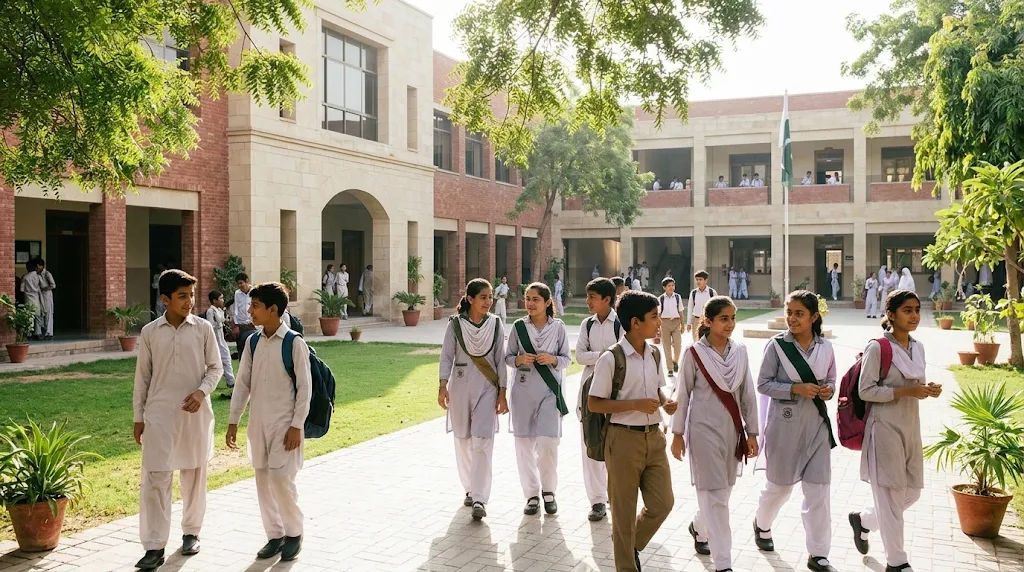 With many educational institutions offering different curricula, facilities, teaching methods, and fee structures, comparing schools can sometimes feel challenging.
Karachi has a wide range of educational options, including private schools, international institutions, and schools following national education systems. Parents searching for the best schools in karachi often want to understand which institutions provide quality education, experienced teachers, a safe environment, and opportunities for overall development. However, selecting a school should involve more than looking at its reputation or popularity.
Every child has different learning needs, interests, and abilities. A school that works well for one student may not be the ideal choice for another. Therefore, parents should compare schools using practical factors such as academic performance, teaching quality, classroom environments, extracurricular activities, student support, and affordability.
This comprehensive guide explains how parents can evaluate different schools in Karachi, identify important differences, and make a confident decision that supports their children's educational journey.
1. Start by Understanding Your Child's Educational Needs
Before comparing schools, parents should understand what their child needs from an educational institution.
Some children learn best through classroom discussions, while others prefer practical activities, visual materials, and individual guidance. Understanding these differences can help families identify suitable learning environments.
Consider Your Child's Age and Grade Level
The requirements of a primary school student are different from those of a secondary school student.
Younger children generally need supportive teachers, engaging classroom activities, and opportunities to develop basic academic and social skills.
Older students may require advanced subject choices, examination preparation, career guidance, and access to specialized facilities.
Parents should compare schools according to the educational needs of the child's current grade.
Learning Preferences
Every child has a different learning style and personality.
Some students enjoy participating in group activities, while others feel more comfortable working independently.
Parents should consider whether a school provides different teaching approaches that allow students to understand lessons effectively.
A flexible learning environment can help children develop confidence and maintain interest in their studies.
Think About Long-Term Educational Goals
Parents should also consider what educational opportunities they want for their children in the future.
For example, some families prefer a national education pathway, while others may be interested in international curricula.
Understanding these goals early can make it easier to compare schools and avoid unnecessary changes later.
2. Compare the Academic Curriculum
The curriculum is one of the most important factors when evaluating educational institutions.
Different schools in Karachi follow different academic systems, and each has its own structure, subjects, assessment methods, and educational approach.
Matriculation System
The Matriculation system is commonly followed in Pakistan.
It provides a structured academic pathway with subjects such as English, Urdu, mathematics, science, and social studies.
Students generally prepare for examinations conducted through relevant educational boards.
Parents considering this system should examine the school's subject coverage, teaching quality, examination preparation, and academic support.
Cambridge Curriculum
Some schools offer the Cambridge educational pathway.
This system emphasizes subject knowledge, understanding, independent learning, and the application of concepts.
Depending on the school and grade level, students may participate in projects, practical activities, discussions, and regular assessments.
Parents should ask how the curriculum progresses from primary to secondary education like the best schools in karachi .
International Curricula
Some institutions offer other international educational programs.
These may emphasize inquiry-based learning, creativity, communication, and global perspectives.
Before selecting such a school, parents should understand the curriculum's recognition, assessment structure, and future educational opportunities.
Which Curriculum Is Better?
There is no single curriculum that is automatically best for every child.
The right option depends on the student's abilities, family preferences, future educational plans, and the quality of teaching provided by the institution.
Parents should compare the actual learning experience rather than choosing a curriculum simply because it sounds more prestigious.
3. Evaluate Teachers and Teaching Quality
Teachers have a direct influence on children's academic progress and classroom experiences.
Even a school with impressive buildings and modern facilities may not provide effective education if its teaching quality is weak.
Check Teacher Qualifications
Parents should ask about teachers' academic qualifications, professional training, and teaching experience.
Qualified teachers generally have a stronger understanding of their subjects and classroom responsibilities.
However, qualifications alone are not enough. Teachers should also be able to explain difficult concepts clearly and communicate effectively with students.
Observe Classroom Teaching Methods
During a school visit, parents can ask how lessons are delivered.
Effective teaching often includes a combination of:
-
Classroom discussions.
-
Practical demonstrations.
-
Reading and writing exercises.
-
Group assignments.
-
Visual learning materials.
-
Individual student activities.
These methods help students understand concepts rather than relying entirely on memorization.
Understand Student Support
Some students need additional explanations or learning assistance.
Parents should ask how teachers identify academic difficulties and provide extra support.
A school that recognizes individual learning needs can help students improve without feeling discouraged.
4. Compare School Facilities and Learning Resources
School facilities contribute to the overall learning experience.
However, parents should focus on whether facilities are useful, safe, and properly maintained rather than simply counting the number of buildings or rooms.
Classrooms and Learning Environments
Classrooms should be clean, organized, comfortable, and suitable for the students' age groups.
Parents should examine seating arrangements, lighting, ventilation, and available learning materials.
A well-organized classroom can help students concentrate and participate in lessons.
Science and Computer Laboratories
Laboratories provide opportunities for practical learning.
Science laboratories allow students to understand scientific concepts through demonstrations and experiments.
Computer laboratories help students develop digital skills and become familiar with educational technology.
Parents should check whether these facilities are available for the relevant grade levels and whether students actually use them.
Libraries and Reading Facilities
A school library encourages students to develop reading habits.
Books, educational magazines, reference materials, and age-appropriate reading resources can support language development and general knowledge.
Parents should ask whether students have regular opportunities to visit and use the library.
Sports and Recreational Facilities
Physical education is an important part of children's development.
Schools should provide appropriate opportunities for sports, exercise, and recreational activities.
Depending on the institution, facilities may include playgrounds, sports courts, indoor activity areas, and equipment for different games.
5. Examine School Safety and Security
Safety should be one of the highest priorities when comparing educational institutions.
Parents need to feel confident that their children are protected and supervised throughout the school day.
Campus Security Arrangements
Ask about visitor registration, entry and exit procedures, security personnel, and student supervision.
Parents should understand how schools control access to their campuses.
It is also useful to ask how the institution handles emergencies.
Cleanliness and Hygiene
Clean classrooms, washrooms, drinking water facilities, and common areas contribute to a healthier school environment.
During campus visits, parents should observe whether cleaning and maintenance appear consistent.
Younger children may require additional support with hygiene and daily routines.
Bullying Prevention
A positive school environment should encourage respect and responsible behavior.
Parents should ask how the school handles bullying, conflicts, and inappropriate student behavior.
There should be clear procedures for reporting concerns and supporting affected students.
Schools that promote kindness and inclusion can help children feel more comfortable and confident.
6. Compare School Fees and Additional Expenses
Financial planning is another important part of selecting a school.
Tuition fees may differ significantly between educational institutions, but parents should consider the complete cost rather than comparing monthly charges alone.
Understand the Complete Fee Structure
Ask schools for detailed information about:
-
Admission charges.
-
Monthly tuition fees.
-
Annual charges.
-
Examination fees.
-
Books and stationery.
-
Uniform expenses.
-
Transportation charges.
-
Extracurricular activity costs.
Some institutions may include certain services in their tuition, while others charge separately.
Having a complete breakdown helps families understand the actual financial commitment.
Consider Future Fee Increases
School fees may increase over time.
Parents should ask about the institution's fee revision policy and consider whether the expenses will remain manageable throughout the child's education.
Changing schools because of financial difficulties can disrupt a student's learning experience.
Compare Value Instead of Price Alone
An expensive school is not necessarily better than a more affordable institution.
Parents should evaluate what the fees provide.
Teacher quality, classroom support, academic resources, safety, and student development are more meaningful indicators of value than price alone.
7. Review Extracurricular Activities and Student Development
Education should not focus entirely on textbooks and examinations.
Children also need opportunities to explore their interests, discover talents, and develop social skills.
Sports and Physical Education
Sports encourage physical activity, teamwork, discipline, and cooperation.
Parents should examine whether the school offers regular physical education lessons and age-appropriate sports activities.
Arts and Creative Programs
Art, music, drama, and crafts allow students to express themselves.
These activities can encourage imagination and help children discover interests outside traditional academic subjects.
Public Speaking and Leadership
Presentations, debates, storytelling, and student-led activities can improve communication skills.
They also teach students how to organize ideas and express their opinions respectfully.
Educational Events and Competitions
Schools may organize exhibitions, science fairs, cultural programs, and academic competitions.
These experiences provide opportunities to apply classroom knowledge in practical situations.
Parents should ask whether students across different grades can participate.
8. Investigate the School's Reputation and Reviews
A school's reputation can provide useful information, but it should never be the only factor behind a decision.
Parents should collect information from different sources before forming an opinion.
Speak With Existing Parents
Parents whose children already attend a school can provide practical information about everyday experiences.
They may discuss teaching quality, communication, classroom management, homework expectations, and administrative support.
Try to speak with more than one family to understand different experiences.
Read Online Reviews Carefully
Online reviews can highlight common concerns or positive experiences.
However, individual reviews may reflect personal situations rather than the school's overall performance.
Look for repeated patterns instead of relying on one extremely positive or negative comment.
Examine Academic Progress
Parents can ask about examination performance, student progress, and academic support systems.
However, examination results should be considered alongside other indicators.
A school should also encourage creativity, confidence, independent thinking, and social development.
9. Consider Location and Transportation
The distance between home and school can affect a child's daily routine.
A long journey may leave students tired and reduce the time available for homework, recreation, and rest.
Check Travel Time
Parents should consider the actual travel time during school hours.
Traffic conditions in Karachi can vary considerably depending on the area and time of day.
It is useful to test the journey during typical school commuting hours.
Review Transportation Arrangements
If the school provides transportation, ask about vehicle safety, driver qualifications, supervision, and pickup arrangements.
Parents should also understand how the school communicates delays or unexpected transportation changes.
Consider Your Family's Daily Routine
A conveniently located school can make attendance and parent involvement easier.
Location should be considered alongside academic quality and other important factors.
10. Visit Shortlisted Schools Before Making a Decision
Online research is helpful, but visiting schools provides a clearer understanding of their actual environments.
Parents should shortlist a few institutions and arrange campus visits.
Prepare Questions Before Visiting
Write down important questions about the curriculum, teachers, fees, safety, and student support.
This makes it easier to compare different schools afterward.
Observe Student and Teacher Interaction
Pay attention to how teachers communicate with students.
Notice whether students appear engaged, whether classroom activities are organized, and whether staff members respond respectfully to questions.
Examine the General Environment
Look at classrooms, playgrounds, libraries, washrooms, and other learning spaces.
Ask whether the facilities are available to students regularly.
A school visit should help parents understand how the institution operates beyond its promotional materials.
11. Create a School Comparison Checklist
After visiting different institutions, parents should organize their observations.
A comparison checklist can prevent important factors from being overlooked.
|
Comparison factor |
What parents should evaluate |
|---|---|
|
Curriculum |
Academic system and subject choices |
|
Teachers |
Qualifications and experience |
|
Teaching methods |
Practical and interactive learning |
|
Facilities |
Classrooms, libraries, and laboratories |
|
Safety |
Security and student supervision |
|
Fees |
Complete annual expenses |
|
Activities |
Sports, arts, and competitions |
|
Location |
Distance and travel time |
|
Communication |
Parent-teacher meetings and updates |
|
Student support |
Individual academic assistance |
Parents can rate each school according to their priorities.
For example, a family with a young child may give greater importance to classroom safety and teacher attention, while parents of older students may focus more on subject choices and examination preparation.
12. Avoid Common Mistakes When Comparing Schools
Even careful parents can make decisions based on incomplete information.
Avoiding these common mistakes can make the selection process more effective.
Choosing Only Because of Reputation
A famous institution may have an excellent reputation, but its learning environment may not match every child's needs.
Always investigate the actual primary or secondary section your child will attend.
Focusing Only on Examination Results
Academic performance is important, but it does not represent every aspect of education.
Consider communication, creativity, emotional support, and extracurricular opportunities as well.
Ignoring the Child's Comfort
Children should feel safe, respected, and encouraged at school.
Parents should consider their child's response to the environment and discuss any concerns openly.
Making Decisions Without Visiting
Websites and brochures provide useful information, but they cannot show every detail of everyday school life.
Visiting shortlisted institutions helps parents make more informed comparisons.
Conclusion
Comparing schools requires time, research, and a clear understanding of what matters most for a child's education. Karachi offers many educational institutions with different curricula, teaching approaches, facilities, and fee structures. Therefore, parents should avoid making decisions based only on popularity, advertisements, or examination results.
The most effective approach is to evaluate each institution using practical factors such as teacher qualifications, academic programs, classroom environments, student safety, extracurricular activities, affordability, and transportation arrangements. Visiting campuses, speaking with existing parents, reviewing school policies, and understanding individual learning needs can provide valuable information.
Parents exploring the best schools in karachi should remember that the most suitable institution is not necessarily the most expensive or famous one. It is the school that provides quality teaching, supports individual development, encourages curiosity, and creates a safe and welcoming environment.
Ultimately, choosing the right school means finding an institution where children can develop academically, socially, and personally. By comparing schools carefully and considering both present needs and future goals, parents can make a decision that gives their children a strong foundation for lifelong learning.