Gaming has become a popular form of entertainment for people of all ages. Whether someone enjoys playing on a computer, smartphone, tablet, or gaming console, an internet connection often plays an important role in the experience. However, one common concern among players is how much internet data gaming actually consumes. Understanding data usage can help players make better decisions about their internet plans and avoid unexpected limitations.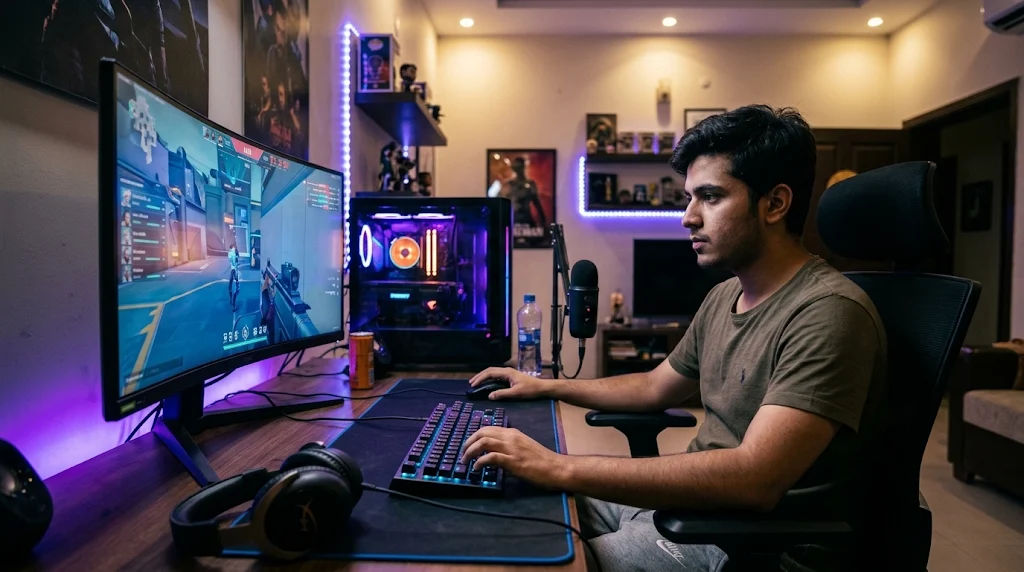
The amount of data used during gaming depends on several factors, including the type of game, playing duration, graphics settings, multiplayer features, and internet connection. Some games require relatively little data to maintain an online connection, while others use additional bandwidth for frequent communication and updates. Online games can also consume different amounts of data depending on whether they include voice chat, cloud-based features, or large downloadable content.
Knowing how gaming data consumption works makes it easier to manage internet usage. This comprehensive guide explains the factors that influence gaming data, compares different gaming platforms, explores downloads and updates, and provides practical suggestions for managing data efficiently.
How Much Data Gaming Uses
Gaming does not consume the same amount of internet data in OPEN 88 situation. A simple multiplayer game may use only a small amount of data because it mainly exchanges information about player movements, actions, and game events.
More advanced gaming experiences may require additional data, particularly when they include voice communication, frequent server interactions, or cloud-based processing.
It is important to understand that playing a game online is different from downloading it. Playing generally involves a continuous exchange of relatively small amounts of information, whereas downloading a game transfers a much larger collection of files.
Average Data Consumption During Gameplay
Many traditional multiplayer games consume approximately 40 MB to 300 MB per hour. However, this is only a general estimate. Actual consumption varies according to the game and its features.
For example, a basic multiplayer game may use less data than a large competitive title with frequent server communication and voice chat.
Some games can consume more than these estimates, especially when additional services are active. Therefore, players should check their device's network statistics instead of relying entirely on general averages.
Why Data Usage Changes Between Games
Different games are designed with different technical requirements.
A simple strategy game may exchange information only when players make decisions. A fast-paced multiplayer game may communicate with its servers continuously to keep player positions and actions synchronized.
Other factors include:
-
Number of players in a session.
-
Frequency of communication with game servers.
-
Voice chat and other communication features.
-
Background downloads.
-
Automatic updates.
-
Cloud gaming services.
-
Additional online content.
These features explain why two games played for the same amount of time can consume different amounts of data.
Factors That Affect Gaming Data Consumption
Several technical and practical factors determine how much internet data a gaming session requires. Understanding them helps players estimate their monthly consumption more accurately.
Type of Game
The game category can influence internet usage.
Casual games often require limited communication with online servers. Their main activities may involve exchanging information about scores, player actions, and progress.
Competitive multiplayer games generally require more frequent communication. Their servers must keep track of changing situations and provide updated information to participants.
Massively multiplayer games can also exchange information continuously because many players share the same virtual environment.
However, a complicated game does not automatically consume enormous amounts of data. Graphics quality and file size do not directly determine how much data is used during ordinary online gameplay.
Playing Time
The longer someone plays, the more data their gaming sessions are likely to consume.
A person who plays for 30 minutes will generally use less data than someone who plays for four hours under similar conditions.
For example, if a game consumes 100 MB per hour, playing for three hours would use approximately 300 MB.
This makes playing duration one of the easiest factors to measure when estimating monthly internet requirements.
Voice Chat Features
Voice communication can increase data consumption because the device continuously sends and receives audio information.
The exact amount depends on the audio quality, communication technology, and number of active participants.
Players who regularly communicate with friends during multiplayer sessions may notice higher consumption than those who keep voice communication disabled.
Text messaging usually requires much less data than continuous audio communication.
Background Applications
Other applications running on a device can also affect internet consumption.
For example, a game may be running while another application downloads files or streams video in the background.
These activities use internet data independently of the game itself.
Closing unnecessary applications and checking background network activity can make it easier to understand where data is being consumed.
Data Usage Across Different Gaming Platforms
Different gaming platforms have different technical requirements. Although the basic principles of internet consumption remain similar, the total amount of data can vary.
PC Gaming
Computer gaming offers flexibility because players can adjust network settings, manage background applications, and monitor data consumption through operating system tools.
Traditional PC multiplayer games may consume approximately 40 MB to 300 MB per hour, although some titles can use more.
PC gaming also involves additional data requirements for software updates, downloadable content, cloud synchronization, and game launchers.
Players should remember that a computer may automatically download updates while they are doing something else.
Console Gaming
Gaming consoles connect to online servers for multiplayer sessions, digital purchases, cloud saves, and system updates.
The data used during gameplay depends on the title and its online features.
Consoles may also download substantial updates automatically. These downloads can sometimes consume several gigabytes or more.
Players who use limited internet plans should review their console's automatic download and update settings.
Mobile Gaming
Mobile gaming is particularly important for people who use cellular data instead of a home internet connection.
Simple mobile games may consume relatively little data during normal play. More advanced multiplayer titles may require greater network usage.
Mobile devices also run background applications, synchronize information, and download updates.
This means the total data recorded by a mobile network provider may be higher than the amount used by the game itself.
Gameplay Data Versus Game Downloads
One of the most important things to understand about gaming is the difference between playing a game and downloading it.
These activities use internet data in very different ways.
Playing a Game Online
When someone plays a game installed on their device, the computer or console usually handles the graphics, animations, sound effects, and other processing locally.
The internet connection mainly transfers information about player movements, game events, scores, and interactions.
This is why traditional multiplayer gaming can use relatively small amounts of data compared with video streaming.
For example, playing for two hours at an average consumption of 100 MB per hour would require approximately 200 MB.
Downloading New Games
Downloading a game can consume considerably more data than playing it for several hours.
Modern games contain detailed environments, sound files, animations, textures, and other digital resources. These files can require substantial storage space and internet data.
Depending on the title, a download might require a few gigabytes or more than 100 GB.
Players should check the download size before installing a new title, particularly when using a limited internet package.
Game Updates and Patches
Updates are another important part of gaming data consumption.
Developers regularly release updates to fix technical problems, improve performance, introduce new features, and maintain online services.
Small updates may require only a few hundred megabytes, while major updates can require several gigabytes or more.
Some games also download additional content automatically when players launch them.
These downloads can increase monthly data consumption even when the actual playing time remains unchanged.
How Much Data Does Cloud Gaming Use?
Cloud gaming works differently from traditional gaming. Instead of running the entire game on a local computer or console, a remote server processes the game and streams the visual experience to the player's device.
This technology allows people to access demanding games without necessarily owning powerful hardware.
However, it can consume considerably more internet data.
Why Cloud Gaming Uses More Data
Cloud gaming continuously transfers video and audio from remote servers to the player's screen.
The device also sends control information back to the server so that movements and actions appear in the game.
Because visual information is transferred continuously, data consumption is much higher than ordinary multiplayer gameplay.
Depending on resolution, frame rate, compression, and service settings, cloud gaming may consume approximately 3 GB to 10 GB per hour or more.
Higher-quality streaming can increase consumption further.
SpeedTestHQ+2
How Video Quality Affects Data Usage
Video quality is one of the biggest factors influencing cloud gaming consumption.
Higher resolutions generally require more information to be transferred.
For example:
-
Lower-resolution streaming generally consumes less data.
-
HD streaming requires more bandwidth and data.
-
Full HD streaming can increase monthly consumption significantly.
-
Higher-resolution streaming can require several gigabytes every hour.
Players with limited internet packages should consider reducing streaming quality when available.
Cloud Gaming and Traditional Gaming Compared
Traditional gaming processes most visual information locally, so the internet mainly carries gameplay information.
Cloud gaming sends the visual experience through the internet.
As a result, someone playing an installed multiplayer game for three hours may consume a few hundred megabytes, while three hours of cloud gaming could consume several gigabytes.
Understanding this difference is essential when choosing a suitable internet package.
How Much Data Do Different Types of Online Games Use?
Not every gaming category requires the same amount of internet data. The following estimates provide a general comparison of traditional gameplay.
|
Game category |
Approximate data per hour |
|---|---|
|
Turn-based games |
5–30 MB |
|
Casual multiplayer games |
10–80 MB |
|
Sports games |
40–150 MB |
|
Strategy games |
20–100 MB |
|
Multiplayer shooters |
80–300 MB |
|
Massive multiplayer games |
40–150 MB |
These are approximate estimates, not guaranteed figures. Actual consumption depends on the game, settings, communication features, and background activity.
Casual and Puzzle Games
Casual games usually require relatively little data.
Many rely on simple interactions, scores, and occasional communication with online servers.
Some can even be played offline after installation.
However, advertisements, online rewards, and additional content may create extra network activity.
Multiplayer Shooting Games
Competitive shooting games often require frequent communication between players and game servers.
The system needs to update player positions, actions, and other important events.
This can result in higher data consumption than simple turn-based games.
Voice communication may increase usage further.
Sports and Racing Games
Sports and racing games often include online competitions, matchmaking, leaderboards, and multiplayer sessions.
Their data consumption depends on the number of players and the amount of information exchanged during each match.
A regular multiplayer session generally requires less data than cloud gaming.
Massive Multiplayer Online Games
Massive multiplayer titles allow many players to interact within shared virtual environments.
The game must exchange information about characters, movements, locations, and activities.
Busy environments can generate more network communication than quieter areas.
However, the actual amount of data still depends on the game's design and server technology.
How Much Gaming Data Do You Need Per Month?
Monthly data requirements depend mainly on how often someone plays and whether they download games or use cloud gaming.
A player who only participates in traditional multiplayer sessions may need considerably less data than someone who regularly installs large games.
Estimating Monthly Gaming Consumption
A simple calculation can help estimate monthly usage.
Use the following formula:
Monthly gameplay data = Data used per hour × Hours played daily × Number of playing days
For example, consider someone who plays for two hours daily, using approximately 100 MB per hour.
The calculation would be:
100 MB × 2 hours × 30 days = 6,000 MB.
That equals approximately 6 GB per month using the decimal conversion of 1 GB = 1,000 MB.
This estimate covers gameplay only. Downloads, updates, voice communication, and other internet activities may increase the total.
Monthly Data Requirements by Playing Time
The following table assumes traditional gameplay averaging 100 MB per hour.
|
Daily playing time |
Approximate monthly data |
|---|---|
|
30 minutes |
1.5 GB |
|
1 hour |
3 GB |
|
2 hours |
6 GB |
|
3 hours |
9 GB |
|
4 hours |
12 GB |
|
5 hours |
15 GB |
These figures are useful starting points when comparing internet packages.
Players should allow additional data for downloads, updates, and other household internet activities.
Is 10 GB Enough for Gaming?
Ten gigabytes can be sufficient for many traditional multiplayer gaming sessions.
At approximately 100 MB per hour, it provides around 100 hours of gameplay.
However, this amount may not cover large downloads, frequent updates, or cloud gaming.
Is 50 GB Enough for Gaming?
A 50 GB package can support substantial traditional gameplay.
For someone who plays installed games and manages downloads carefully, it may provide considerable flexibility.
However, cloud gaming and large game installations can use this allowance much faster.
Is 100 GB Enough for Gaming?
A 100 GB allowance offers more flexibility for regular gaming.
It can support many hours of conventional online gameplay while leaving some data available for other activities.
Nevertheless, players who frequently download large titles or stream games should consider their additional requirements.
How to Monitor Gaming Data Usage
Monitoring internet consumption is a practical way to avoid exceeding a monthly data allowance.
Most modern devices provide tools that help users understand which applications consume the most internet data.
Check Data Usage on Windows
Windows computers include built-in network usage information.
Users can open Settings and navigate to Network and Internet to find data usage information.
This section can show how much data individual applications have consumed during a selected period.
It helps identify whether a game or another background application is responsible for increased consumption.
Monitor Data on Mobile Devices
Android and iOS devices also provide mobile data monitoring features.
These settings allow users to review which applications consume cellular data.
Checking this information regularly can help identify unexpected background activity.
It is particularly useful when playing games through a mobile internet connection.
Check Router Data Statistics
Some internet routers provide detailed network statistics.
These statistics can help identify the devices consuming the most household internet data.
Families sharing one connection can use this information to understand how gaming affects their overall monthly consumption.
Practical Ways to Reduce Gaming Data Usage
Managing internet consumption does not necessarily mean reducing gaming enjoyment. A few simple adjustments can help players control unnecessary data usage.
Disable Automatic Downloads
Automatic downloads can consume significant amounts of data without players noticing.
Reviewing update settings allows users to choose when game updates should be installed.
Where possible, schedule large downloads when an unlimited or suitable home internet connection is available.
Use Wi-Fi for Large Downloads
Downloading games through mobile data can quickly consume a limited package.
Wi-Fi is generally a better option for downloading large games, additional content, and software updates.
Players should also check whether their home internet package has a monthly data allowance.
Manage Voice Chat
Voice chat can increase data consumption during multiplayer sessions.
Players who do not need voice communication can disable it when appropriate.
Text communication may be a lower-data alternative for simple conversations.
Close Unnecessary Background Applications
Other applications may use internet data while a game is running.
Closing unnecessary programs can help prevent unexpected downloads and background synchronization.
This is particularly helpful on computers and smartphones.
Reduce Cloud Gaming Quality
Cloud gaming services may provide options for adjusting streaming resolution and quality.
Selecting a lower quality setting can reduce data consumption.
Players should also check whether their chosen service offers data usage information or streaming controls.
Does Gaming Require Fast Internet or More Data?
Internet speed and monthly data consumption are two different things.
Speed determines how quickly information can travel between a device and the internet.
Data consumption measures how much information is transferred over a particular period.
For traditional multiplayer gaming, a stable connection with low latency is often more important than having extremely high download speeds.
Latency, commonly called ping, measures how long information takes to travel between a device and a server.
A stable connection helps players experience smoother interactions and fewer interruptions.
A high-speed connection does not automatically mean a game will consume more data. However, it may allow other applications and background downloads to transfer information more quickly.
Common Mistakes That Increase Gaming Data Consumption
Some gaming habits can increase internet usage without providing much additional entertainment.
Understanding these mistakes can help players manage their monthly allowances.
Ignoring automatic updates: Games may download updates without players realizing how much data they require.
Confusing game size with gameplay usage: A large installation does not necessarily mean that playing the game will consume equally large amounts of data.
Leaving cloud streaming quality too high: Higher-quality streaming can increase data consumption significantly.
Ignoring background applications: Other programs may use internet data while gaming continues.
Forgetting additional downloads: Extra maps, downloadable content, and optional resources can increase monthly usage.
Avoiding these common mistakes makes it easier to maintain predictable internet consumption.
Conclusion
Understanding how much data gaming uses is important for anyone who wants to enjoy digital entertainment without exceeding an internet allowance. Although gaming is often considered a data-intensive activity, traditional multiplayer gameplay generally consumes less internet data than many people expect.
Most conventional multiplayer experiences use approximately 40 MB to 300 MB per hour, depending on the title, communication features, and network activity. This means players can often enjoy several hours of gaming without using an entire gigabyte.
However, downloading games, installing major updates, and accessing additional content can significantly increase monthly consumption. Cloud gaming is another important consideration because it streams continuous video from remote servers and can require several gigabytes every hour.
The best approach is to understand personal gaming habits and monitor actual internet consumption. Checking device statistics, managing automatic downloads, using suitable Wi-Fi connections, and adjusting cloud streaming quality can all help control data usage.
Online games do not necessarily require enormous monthly data allowances when players use traditional locally installed games. The actual requirement depends on playing time, game type, downloads, and additional internet features.
By understanding these differences, players can select appropriate internet packages, avoid unnecessary consumption, and enjoy a smoother gaming experience. Good data management makes gaming more convenient while helping households maintain better control over their internet resources.